


Devilman Pantocrator: the Face of Mercy and the Face of Judgment
Akira Fudō embodies, in Devilman, the dual Christological figure of the Pantocrator: the mercy that weeps for the innocent and the justice that judges evil without becoming evil. From Miki's death to Armageddon, the analysis shows that the Devilmen function as the holy remnant of the end times, while a morally relativized world begins to call a demon precisely that which still retains the form of good.
Gabriel G. Oliveira
4/18/202635 min read
Devilman, the face of God that the World is Afraid to Face
Becoming a Devilman does not mean learning to appreciate hell. It's going thru it without applying for citizenship. The contemporary confusion begins precisely at this point: many people believe that every struggle contaminates the soul merely by contact, as if resisting the abyss and agreeing with it were equivalent. They are not. In the Summa Theologica, II–II, q.64, Thomas Aquinas distinguished just force from the corruption of the end so clearly that, if he were alive today, many perfumed consciences would be unsettled. The moral war itself is not what contaminates. What makes everything contaminated is consent. It is not the struggle that rots, but the delight in resembling what one fights against.
I understood this from an early age, even tho I didn't have a ready-made catechism or a pocket manual. The first comic book I read was "Infinite Crisis," a gift from my father to a five-year-old boy who still couldn't name what he saw but already understood that symbols teach better than poorly made sermons. It wasn't the punch that got me with Superman, but the attitude. There was a reflection of Christ who consciously sacrifices himself, not this Christ of bumper stickers, reduced to a sentimental slogan for people who couldn't handle two minutes of the Gospel read seriously.
The comparison becomes even more intriguing when considering the past. The original Superman by Jerry Siegel and Joe Shuster brought a Jewish messianic vision and, with it, a slight flirtation with well-intentioned social engineering, as if poverty were a kind of problem that could be corrected thru brute force and good intentions. That impulse to demolish slums to teach the rich how to build houses was not exactly redemption. It was public management with a cape, fists, and an optimism that ignored the gravity of human fall.
The character matures by leaving behind that muscular naivett and by connecting with a more incarnate, tragic, and Catholic Christ in the understanding of the human drama. In the film Man of Steel, directed by Zack Snyder, Clark does not seek a priest for strategic advice; he reflects on the trust in beings who have already shown an industrial skill for cruelty. The point is not that the scene requires a calendar parallel. What matters is the essence of the dilemma. In Fear and Trembling, Kierkegaard refers to the absolute risk that does not fit into any table or calculation as a leap. And then, the leap ceases to be an abstraction and becomes flesh, fear, responsibility, and protection.
The Mosaic origin remains there, clear to those who can still interpret symbols without requesting a criminal investigation. The boy coming from Krypton, taken in by a sterile couple in a winter that distances the world from the rest of itself, is a Moses of science fiction. Kal-El arrives in a ship, just as the other arrived in a basket. The House of El, in itself, carries the name of the biblical God, and this is not by chance. They are names that act as angelic names, names of mission. Krypton grants you power; Earth provides you with form. John Byrne understood this when he made the hero more human in the 1980s: power can be given, but humility remains an option. This aspect irritates the sycophants of cynicism, as it shows that greatness without discipline is nothing more than arrogance with good publicity.
Clark grows up on a farm, learns to have boundaries before learning to be effective, and wishes to be ordinary before realizing he never will be. Smallville was very successful in addressing that conflict with the town, with friends, and with his own identity. The best Superman story wasn't about explosions, but about character. Aristotle had already resolved this in Nicomachean Ethics, II: character is formed by habit, not by climax. Virtue is forged in the repetition of everyday life, long before it manifests in a moment that deserves a soundtrack.
Humberto Eco identified another problem early on in Apocalípticos e Integrados: the contemporary Superman finds himself trapped between myth and romance. The myth has already occurred; the romance is surprising. So that the hero seems eternal, the industry prevents him from consuming himself, from truly maturing, and from facing the consequences. Marrying Lois, aging, and losing something without an editorial reset: all these things threaten the system. Stan Lee accepted the game without much ceremony. The reader should notice the change without being overly exposed to it. As a result, we have a hero who can do everything but changes little; he is so powerful that he is not limited, and so moral that he does not dominate.
It is at this point that Eco mentions heterodirection: the individual learns to desire what the pre-established channels order him to desire. The absence of consequences for Superman leads to the pedagogy of conformity. The wrong question is always: "why didn't he do everything?" The appropriate question is: "who granted you the right?". When the authors try to force an answer, the symbol distorts. In Between the Hammer and the Sickle, he builds peace by sacrificing freedom. Injustice begins by punishing tyrants, but ends up acting like one. Plato had already warned in The Republic that excessive zeal tends to degenerate into tyranny. When the symbol of the savior transforms, the hero begins his training to become the antichrist.
The character's most intelligent narratives are aware of this. Alan Moore closes a cycle in Whatever Happened to the Man of Tomorrow? deconstructing the myth without annihilating it. In Kingdom Come, Mark Waid and Alex Ross present a mature and wounded Superman, forced to reassume his role as a hero in a world that trades virtue for spectacle. None of these stories needs to be considered canon to be authentic. Myth does not require chronology; it requires meaning. When the industry itself unites Lois and Clark and then dissolves the marriage for editorial convenience, it ends up confessing that its eternal return is less metaphysical and more commercial.
Even the glasses, which have become a joke for those who can't understand the symbol, work better than many treaties considered serious. In The Legacy of the Stars, Mark Waid gives a rather poetic answer: Clark's eyes are so intense that the glasses make them invisible. And, in this case, poetry explains more than physics. He longs for a simple life, despite possessing almost divine power. Lex Luthor would never understand this, for the arrogant only acknowledges greatness when it reflects their own ambition. Tomás would assert that this disordered greatness is pride. And he would assert this without needing motivational consulting.
Essentially, the glasses work because we all wear some kind of them. Clark considers himself inferior to Lois, while Lois sees herself as inferior to Superman. Poorly distributed passions, imagined loves, crossed inferiority complexes. The human drama has always surpassed any Brainiac. Greek mythology also does not hold up to the criteria of a police officer, but even so, it underpins the West. Asking for bureaucratic verisimilitude from a symbol is like asking for a ruler to measure music. It is to this degree of spiritual illiteracy that many people take pride in being practical.
It was precisely in this context that Devilman entered my life and rearranged the pieces. If Superman represents the Christ who hesitates to save a cruel humanity, Akira Fudō is the Christ who accepts sacrificing himself in an apocalypse without therapeutic reward, without a clean resolution, and without manageable consolation. Go Nagai already starts with a semantic trap in the name: he calls the one who maintains the moral axis a demon, to test who is still able to differentiate form and purpose. Akira is not the creature. It is the intermediary. In the biblical Apocalypse, the Lamb wins thru sacrifice. In Devilman, this victory comes at a high price. Those who enter in search of horns and gore end up leaving without noticing the Gospel that was presented to them.
This is the rule that governs the manga from beginning to end: fight in hell without letting hell into you. Aristotle would refer to this as the permanence of telos under pressure. Thomas would speak in the reverse order. Chesterton would describe it as sanity. When it is not used to deceive, NLP would call it anchoring. The name is irrelevant. The principle is old, rigid, and not very receptive to the spirit of the times: spending the nite without sacrificing the soul in exchange for efficiency.
Before any shy teenager realizes that cowardice can be temporary, the universe of Devilman had already been different. And not another in the romantic sense of "lost world," that esoteric nonsense for impressionable adults. Another in the metaphysical aspect: an existence in which form had not yet disciplined potency. In Go Nagai, the demons do not appear as extraterrestrial beings invading Earth; they are remnants of a primitive, symbiotic, wild, and almost plastic creation, in which flora, fauna, and matter still seemed to be experimenting with what they would become. This is quite similar to what Aristotle explains in Metaphysics when dealing with potency without a defined form: everything can transform into anything, for almost nothing has learned what it truly is.
From this primordial soup emerges Satan, and an important point is that he is not presented as the villain of a children's catechism. He appears frozen, inert, stagnant, resembling a failed god trapped in an ice age that is both climatic and moral. The symbol is too clear to be ignored: evil does not disappear; it hibernates. In the Summa Theologica, Thomas Aquinas states that evil does not have its own substance; it takes advantage of the good. Thus, freezing evil is not defeating it. It is enough to create a conducive environment for people to forget the reason why it was dangerous.
The world goes on. Dinosaurs appear and disappear, the experiment of life restarts, and, finally, the true question arises: the human being. Not because it is more powerful than demons, but because it comes into the world with logos, with a reason directed toward a purpose. Aristotle had already noticed the inconvenience of this gift. The question of man has never been limited to thot alone. It was necessary to choose what to think about. An end needs to be discerned, safeguarded, nurtured, maintained. And, when this axis fails, the tragedy does not happen immediately. It organizes itself with the patience of an engineer.
It is in this context that Akira Fudō emerges, and Go Nagai stands out by not attributing any initial epic merit to him. Akira does not appear as a predestined hero with an open heart, nor as a warrior who is secretly prepared. He enters fragile, shy, excessively sensitive for his own time, courteous to the point of hurting himself with it. Modernity labels this type of person as nice and then hands them over to the first rude individual who has the self-confidence to open the door. Aristotle would assert that she lacks andreia, the courage that orders fear. It is not about the elimination of fear, which is an adolescent fantasy, but about its control.
Ryo Asuka emerges as the ideal counterpoint: rich, distant, armed, silent, and possessing information that precedes morality. Ryo does not ask reality for permission; he warns it about what is about to happen. In Group Psychology and the Analysis of the Ego, Freud contributes to naming the charm that such figures exert: the allure of mystery, the fetish of power, and the seduction of those who seem to dominate the underground while others remain on the surface. However, this archetype predates Freud. It is the seducer who provides wisdom before inquiring if the other has an ethical basis to sustain it.
By informing Akira that the demons have awakened and are returning to infiltrate society, Ryo is not just initiating the plot. It is promoting a new perspective: the world is worse than you think, therefore, you have the right to act in an extreme manner. Dostoevsky had already addressed this mechanism in the character of the Grand Inquisitor in "The Brothers Karamazov." The common man does not tolerate freedom, so someone "strong" needs to do the dirty work. The problem is that this someone is rarely morally reliable.
For this reason, Black Sabbath is not just a simple orgy of shock with LSD, blasphemy, and nudity exposed out of youthful rebellion. It is an ethical laboratory. By mixing body, impulse, substance, and disorder in the same space, Go Nagai achieves something more intelligent than moralism and more sincere than hedonism: it reveals a practical reason being deliberately disconnected. Thomas Aquinas would characterize this as a disorder of the sensitive appetite. When desire stops following reason and begins to self-manage, the devil doesn't need to invade anything; he finds the door wide open, illuminated, and with loud music.


The fusion with Amon occurs because Akira, paradoxically, is not evil enough to be fully possessed. This is the part that many hasty readings compromise. Akira does not defeat Amon out of sentimental purity, but by maintaining a moral axis. Aristotle would assert that imperfect habits persist in him, but they are directed toward the good. Amon represents strength, ferocity, war, and appetite. Akira establishes a purpose. Victory is not something passive. It is the victory of phronesis over violence, of practical wisdom over pure instinct.
In this way, Devilman emerges: not a domesticated demon, but a morally repugnant anomaly to hell, a demonic body controlled by a human soul. The world, which cannot see beyond appearances and clings to them, sees a monster. Nagai addresses an extremely delicate theological point: if Christ were to return now, the likelihood of being considered a threat to public safety would be very high. In "Orthodoxy," Chesterton makes an irony by stating that the world accepts almost everything, except the truth when it demands change. Devilman is that taken to the visual extreme: the Messiah with a nightmare appearance.
The first human response confirms the norm. The grotesque causes more fear than refined evil. The hybrid monsters of Devilman refer to what Ovid presents in Metamorphoses: the body transforms into the visible representation of internal disorder. For this reason, the manga does not promote the naive idea that it would be enough to eliminate ugly creatures to restore the good. Evil demands a toll from those who challenge it. And acting justly in a chaotic world almost always causes more pain than virtue advertising campaigns would like to admit.
The battle against Sirene and Kaim represents the first significant crack in Akira's simplistic view. Before that, good could be conceived as a direct opposition to the monstrous. After them, no more. Sirene and Kaim do not act like two chaotic elements randomly thrown onto a gore screen. They fight like a couple. There is fidelity, mourning, anger, memory, and bond. And that is exactly what makes them dangerous. If even monsters are capable of love, what is the difference between human love and demonic love?
The answer does not lie in the depth of the feeling, but in its direction. Sirene loves Kaim, but that love is not beneficial. He does not command, does not create, nor safeguard the real. Revenge is simply intensified by him. The contemporary mistake lies in considering affection as a sufficient criterion, as if feeling intensely were already a reason for anything. Tomás would never agree with that. Charity is not just the force of impulse; it is just love. When detached from its purpose, love ceases to be a virtue and transforms into a safe conduct for atrocities disguised as elegance.
Akira learns this in a rather bitter way. When confronting Sirene, he realizes that his battle is no longer against beings completely alien to him, but against the chance of also corrupting his own love.
Because the line between sacrificing oneself for a just cause and turning pain into a heroic identity is more subtle than many melodramatic individuals would like to acknowledge. Sirene does not fall for loving too little, but because she loves in an egocentric way. Devilman triumphs by fighting without turning his own pain into a throne.

It is precisely in this aspect that the material of Shin Devilman, despite being released later, expands the scope of the work. Recent sources consider Shin Devilman the first official sequel, released between 1979 and 1981, occurring immediately after Akira's encounter with Sirene. If read as a later block or fitted earlier, the effect remains the same: to highlight that the evil in Devilman is neither just zoological nor contemporary. He is historical, habitual, and didactic in the worst sense of the word.
By launching Akira and Ryo into time travel, the manga is neither providing fan service nor a cultural excursion. It is imposing an unpleasant truth on the reader: centuries change their attire much more quickly than they change their transgressions. The temptations return with a new appearance, new banners, and new impactful phrases, but the content remains the same. The devil does not create the error of emptiness. He murmurs the precise justification to the ear that was already inclined to err. Thomas Aquinas would assert again that evil is not a positive substance, but rather a deprivation of order. Shin Devilman turns this into time travel and blood.
The first major stop on this itinerant hell is the Germany of the young Adolf, before the monster transforms into a historical machine. And this is one of the most cruel aspects of Go Nagai: there is no childish relief in claiming that evil came from outside, took hold of an innocent man, and resolved the tragedy thru possession. Adolf presents himself as common, small, resentful, not yet established as a calamity, but already inclined to trade purpose for compensation. Aristotle would assert that a soul without an organized telos seeks excesses to feel complete. When a story appears that justifies their failure and offers them a mission, the poison finds a vessel.
In Shin Devilman, the demon does not create Adolf's hatred. He organizes it. It grants resentment an epic language, presents an enemy, provides justification, and offers a moral grandiosity to personal pain. In On the Genealogy of Morals, Nietzsche had already demonstrated that resentment needs a moralized opponent to thrive. Go Nagai elevates this to a historical level: personal pain finds a superficial metaphysics and quickly transforms into the bureaucracy of death. In this case, hell is not spectacular. It's an administrative matter.
Akira observes everything with a horror that is concretely real. The worst part is not that Adolf screams; it's that he agrees. When addressing the capital sins, Thomas emphasizes that the external act is preceded by a disordered internal pleasure. The tragedy does not begin when the crowd advances. It begins when someone appreciates the idea of turning their own resentment into a noble cause. From that point on, the devil doesn't even need to try so hard.
Joan of Arc appears as a perfect counterpoint. In this context, the dispute does not occur between faith and disbelief, but between competing purposes that use religious language. Joan longs for the end of the war thru war, and the demons precisely exploit this contradiction: when the means contradict the end, tragedy seeps in. Aristotle warned that it is not enough to desire the good; it is necessary to practice it properly. Joan symbolizes holiness pressured by history. What the demons do is cruelly remind us that even the most just cause can be corrupted if prudence is lost.
Nike, the false goddess of victory, is depicted in Samothrace, and the subtlety of the scene is poisonous. She offers not just physical seduction; she promises triumph. And glory is a much more subtle poison than lust when it reaches a weary soul. The fact that she was Amon's lover is not just a detail to enrich the plot. This demonstrates that even the body Akira governs has memories, impulses, and paths that can be reactivated. Amon answers the call of chaotic triumph. Akira hesitates because victory, when it appears inevitable and glorious, is always riskier than accepted defeat.
In this episode, Ryo acts almost like a surgeon. Not because he is good, but because he is capable of hurting what Akira hesitates to touch. Here, the tension between the two becomes more evident than in many explanatory dialogs. Ryo sees faster, but loves poorly. Akira loves better, but sometimes, he takes a long time to do what needs to be done. Tomás would say that this is the distinction between intelligence without charity and charity that struggles to become prudence.
The visit to Versailles, accompanied by Marie Antoinette, again alters the nature of the evil presented. It is no longer about resentful anger or military glory. It refers to anesthetized decay. No one needs to be openly malevolent when everyone has already gotten used to living in a scenario where people's reality has turned into mere decoration. In this context, Marie Antoinette is neither portrayed as an misunderstood saint nor as a caricatured evil figure. She represents an elite disconnected from reality, unable to perceive the impact of their own actions. Aristotle understood that injustice does not always arise from the conscious desire to do evil. Frequently, it arises from complacent indifference.
The same applies to narratives that place massacred peoples in opposition to civilizing empires. Contemporary barbarism has this repugnant habit of presenting itself with a flag, document, and discourse of progress. Go Nagai does not idealize indigenous peoples, suggesting that purity automatically arises from technological distance; at the same time, he rejects the civilizational fallacy that asserts technical superiority is synonymous with moral superiority. The demons present themselves almost as advisors to the massacre, providing ready-made justifications: evangelization, development, order, progress. The result is the usual. The desire to dominate begins to prevail over reason, and natural law is negotiated in the public square for an affordable price.
These episodes of Shin Devilman do not intend to fix the past. They exist to highlight that historical hell operates on autopilot whenever human beings replace purpose with sensation, order with imposition, and truth with convenience. Akira traverses these centuries like a foreign body: too good to fit into corrupt systems, too monstrous to be accepted by them. Ryo observes everything with a glacial calm that already reveals his true essence. And the reader, if still awake, understands the main idea: almost any era would accept demons as saviors, as long as they promised a quick victory and dispensed with virtue.
When the extra chapter comes to an end, the main manga continues to tighten the tourniquet. Jinmen stands out as one of the most severe lessons in the entire work. He is not just a turtle demon with human faces trapped in its shell. He represents an obscene philosophical argument. His "vegetarian" rhetoric, which claims that man is merely cattle in a cosmic food chain, reflects the current logic that reduces human dignity to biology, statistics, or utility. Jinmen's goal is not just to defeat Akira. He wants to undermine his moral sense.
It is for this reason that the confrontation carries a unique weight. Akira allows Jinmen to hurt him not out of sadism, nor for therapeutic masochism or penitential exhibitionism, but out of active compassion. He wishes, even if subtly, to alleviate the pain that Sachiko went thru. Thomas Aquinas would characterize this as suffering with the other out of love for the good, and not due to disorder of the soul. Instagram psychology would call it a self-esteem issue and overlook the essential. Akira suffers because he refuses to save in a hygienic way.
To kill Jinmen, you must wound what you want to protect. This is the tragic vocation concentrated in a single monster. In a distorted world, no just action is ever accompanied by a sense of purity. The good, in this case, does not comfort; it demands. And it is precisely after Jinmen that Devilman stops being just a tragic hero and transforms into something much more singular: a man fighting against evil who does not succumb to the temptation of shaping his own soul in the image of the adversary.

From this point on, the work changes its tone. Hell does not come just as a direct attack, but also as a strategy of attrition. Geruma masterfully represents this stage. Associated with waters and emotions, he personifies the modern demon par excellence: not the one who shouts "hate," but the one who whispers "feel." He does not demand that Akira renounce morality; he merely suggests that morality is too costly, that steadfastness is excessively burdensome, and that perhaps the wisest course is to give up gracefully.
It is a very current temptation. Not to damage the good, but to exhaust it. Do not condemn vise with brutal sincerity, but merely label any limit of repression and any pathological rigidity as excessive. Geruma proposes collapse using therapeutic language. And here Devilman approaches the abyss dangerously, not out of malice, but out of exhaustion. There are temptations that do not yield to pleasure. They win by attrition.
Akira resists because he maintains something rare: an identity that does not require applause, catharsis, or validation. He doesn't fight to feel complete. He fights because it is right to fight. This places Akira in direct contrast with Dostoevsky's Grand Inquisitor. The Inquisitor, considering freedom an excessive burden for men, rejects it, while Akira accepts this burden without using it as a justification. He doesn't need to care about the weight. Just don't lie about it.
Rasber elevates the analysis to an even more relentless level. Evil ceases to manifest as a grand entity and begins to present itself as a structure, network, environment, or infrastructure. Rasber enters without fanfare, without introduction, without ostentation. And this is ideal, as the greatest evils rarely begin with a bang. Aristotle was already aware that vise rarely presents itself as vise. He arrives with an excess of reasonableness, excessive prudence, necessary adaptation, and modest concession. Rasber is the scenario that turns the blow into something inevitable.
Its white and woven form is more cunning than it appears. Purity, neutrality, and good intention are suggested by white. Thomas Aquinas reaffirms in I–II, q.18 that evil does not generate substance; it corrupts direction. Rasber doesn't manufacture anything. Involves, captures, appropriates, makes common. It is not necessary to convince you thru philosophical arguments, as the web operates based on social custom. You wake up using categories you never chose and come to call that freedom.
In some versions of the story itself, its creatures are presented as Vetra's Spiders, spiders used to infect human beings. The verb "infect" is perfect. Rasber does not convince at first; he contaminates by proximity. When addressing scandal in II–II, q.43, Thomas explains that error spreads more thru example than thru teaching. Before making it conscious, the web causes the deviation to become habitual. When he realizes it, he is already defending as freedom something he only learned thru contact.
At first, he presents himself as a swarm of spiders connected to a greater demon. Subsequently, it becomes clear that the spiders are, in fact, Rasber. The image is excessively philosophical to be casual: structural evil no longer requires a great conscious tyrant when the loss of telos has become part of the culture. This would be considered by Chesterton as a form of respectable madness. With his usual malice, he would also assert that the devil's greatest triumph was convincing the world that he does not exist. Rasber does worse: he convinces the world that there is no option other than the web. It is common not to see the whole, and the web appreciates it.
Rasber is more dangerous than many princes of hell, for he avoids confronting the truth directly. He becomes the foundation of error. He does not ask for worship. It only asks that you renounce the internal hierarchy of the soul, considering impulse as identity, desire as right, and reaction as truth. Capture rarely occurs all at once. It follows thru comfort, repetition, micro-concession, progressive anchoring — and NLP, by explaining this logic without presenting it as a stage trick, manages to capture the mechanism. An internally disorganized man is the perfect material for any external structure. And still has the audacity to call it authenticity.
When Devilman confronts Rasber, he doesn't just come across spiders. It deals with an inverted ontological concept: it is not the spider that creates the web; it is the web that creates the spider. Evil no longer needs a spectacle to appear grandiose. Just make the monstrous seem reasonable. Rasber wants exactly that: not to eliminate Akira immediately, but to condemn him to irrelevance, making him so busy fighting symptoms that he can't focus on the root of the problem. This trick is highly appreciated in the modern world. Then it refers to realism.
It is also at this moment that a crucial aspect for the outcome begins to be understood: Rasber only thrives because humans were already prepared for him. The demon was not responsible for the creation of the moral void. It was filled by it. Akrasia, defined by Aristotle as the action contrary to the known good, transforms here into a cultural system. Virtue begins to be perceived as a manufacturing defect. Incarcerated people believe they are connected. Good men begin to feel powerless precisely because they refuse to think in accordance with the web.
From this point on, the apocalypse ceases to be seen as an extraordinary event and begins to seem like something ordinary. This is the impressive merit of Go Nagai: making the catastrophe cease to be theatrical and become part of everyday life. When the reader finally understands the mechanism, it is no longer possible to think that brute force would solve it. What has always remained remains: inner harmony, purpose, and the courage to bear the consequences of being outside the web. The world considers this madness until it realizes it has become completely insane.

When the Soviet leader appears as a demonic commander, Go Nagai is not creating a silly pamphlet. He is painting negative theology with ink and violence. An officially atheistic regime, ready to sacrifice individuals for the sake of a future paradise, structurally adopts the role of the Antichrist: promised peace, centralized power, an enemy to be eliminated, and suffering justified as an inescapable cost. Those who consider this exaggerated often have accepted more secular eschatology than they realize.
In this context, nuclear war emerges as an eschatological parody of Enlightenment reason. The bombs do not fly due to a lack of knowledge, but due to strategy. In Eichmann in Jerusalem, Hannah Arendt coldly depicted how evil can operate without apparent hatred, merely thru functional obedience. In Devilman, this only becomes evident because the author has the sincerity to expose what real history managed to conceal thru acronyms, protocols, and polished tables. The system operates both with literal demons and without them. This is exactly the most obscene part.
Akira feels the hatred intensifying within him, not as a hysterical explosion, but as a moral weight. His anger is not the resentment of the impotent envious. It is a just anger seeking not to become a vise. Thomas Aquinas, in II–II, q.158, makes a clear distinction between just anger and uncontrolled anger. The magnitude of the injustice is Akira's problem. When everything is considered a crime, any response seems insufficient or monstrous. The hero begins to understand that, at certain moments of the fall, personal virtue is not enough to stop the machine.
Zenon's entrance confirms this. The king of demons presents himself as the ideal representation of a distorted anthropology: multiple faces, fused bodies, beauty and monstrosity coexisting in an obscene tension. In The Confessions, Augustine had already stated that evil does not create, but distorts. Zenon does not need to persuade with the truth. He persuades by guaranteeing order. And totalitarianism always offers order first, spreadsheet second, and cemetery last.
Amidst this chaos, humanity takes on responsibilities that the demons, on their own, perhaps would not be able to execute with such effectiveness. The crowd begins to kill out of suspicion, fear, confusion, and the desire to be on the right side of the panic. It is at this point that Devilman becomes almost intolerable in its sincerity. The monster does not triumph merely by dominating man. It wins when it manages to make man hate with a clear conscience.
Akira decides to act, even aware that his action may already be too late. He rejects the strategy of waiting and takes to the streets not because he believes victory is certain, but because omission has already become a form of consent. Aristotle would refer to this as a conflict between phronesis and an extreme situation. The wise man opts for proportional means, but the world has reached a point where proportionality has been fragmented on all sides. Heroism begins to resemble vanity. Even so, Akira cannot stand idly by. There are loyalties that persist even when hope is no longer sure if it is still hope or just a memory of obligation.
The biblical symbolism becomes even stronger when the great light arrives and a part of the world turns into salt. The mention of Sodom and Gomorrah is not just a figure of speech. It imputes. In Genesis 19, the destruction does not happen by chance, and Lot's wife turns into a pillar of salt because she remains emotionally attached to the city she needed to leave. In Devilman, all of humanity regresses. And the result remains the same: paralysis, crystallization, and moral death, which becomes visible as a mineral landscape.
It is at this moment that Ryo stops being just a mystery and takes on the role of Satan. The manga does not present this as a "brilliant plot twist" for surprise collectors. It concludes a line of theological thought. Satan is not the folkloric villain with a trident and goatee. It is the angel of pure intelligence who refuses to serve. In The City of God, Augustine precisely depicts this action: self-love that leads to contempt for God. Evil does not arise because someone loves destruction for what it is. It arises because someone loves themselves with such intensity that they refuse any higher authority.
And what makes this even more cruel is the fact that Ryo doesn't feel hatred for Akira. He loves him. However, he loves in a distorted, regressive, and narcissistic way. Freud would refer to this as regressive object love; Tomás, as curvus love, a love that folds back on itself. Akira transforms, for Satan, simultaneously into an object of desire and a metaphysical obstacle. Humanity must perish not for being inherently worse than demons, but for occupying the symbolic space of what Akira loves without going thru Ryo. Ryo's jealousy transforms from an emotion into a cosmology, until the death of Miki, Akira's girlfriend at this point in the story, and Akira's adoptive parents and Miki's younger brother, perhaps one of the most brutal and terribly poetic scenes in anime and manga, then comes Akira's despair and pure hatred.

The final war is everything that current pop culture does not tolerate: a massacre without glamor. No victorious journey, no programd overcoming, no guarantyd return in the next season. Demons against Devilmen, bodies piling up as statistics, not as people.
In Violence and the Sacred, René Girard demonstrated that organized violence constantly seeks a scapegoat to restore balance. Here the mechanism does not work. There is no one to take on the collective sin. Only devastation remains.
Akira persists in the fight even when the cause seems lost. And that is exactly what makes his figure so offensive to the utilitarian mindset. Kierkegaard would refer to this as a leap of faith. Acting without certainty of success, because action is still necessary. The contemporary world values efficiency, measurement, results, and governance, and therefore underestimates people like him. They don't fit into spreadsheets, they are not used as showcases for public policies, and they are not suitable for therapeutic speeches. They fight because it is necessary to fight. Just that. And, in some cases, this "just that" is more shocking than any triumph, Akira, even tho he is immersed in anger and as if he wanted to save Ryo from himself.
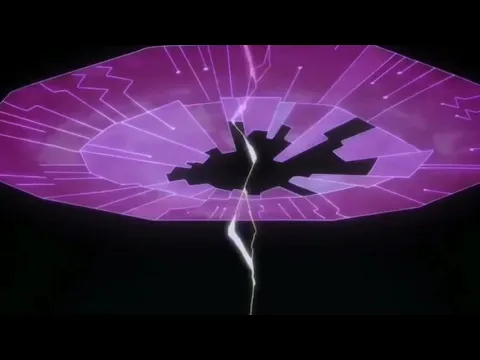
When Akira is torn apart on the battlefield, the manga utters its highest blasphemy against the spirit of the times: good truly loses. Not in a symbolic way. Not "for now." Not as a pedagogical step toward a future victory. Lost. The body becomes waste. Silence is more impactful than any word. A generation raised on therapeutic stories, in which all pain must lead to emotional growth and future reward, is faced here with a direct refusal. The world can oppress the just without remorse. And the just do not need to become traitors to demonstrate their relevance.
Only after winning does Ryo realize the magnitude of the defeat. Before the remains of Akira, Satan comprehends too late what arrogant minds often understand too late: absolute victory is sterile. In Beyond Good and Evil, Nietzsche warned that power does not generate meaning by itself. Ryo conquers the planet, but loses the only connection that made this conquest comprehensible. There is no functional kingdom, audience, or humanity to be managed. Just a destroyed world and an angel devastated by its own logic devoid of love.
The lament that follows is not Christian repentance. He does not have enough humility for that. It is a metaphysical despair. Thomas Aquinas, when addressing the fall of the angels, declares that their decision is irrevocable precisely because of the clarity with which it was made. Understanding without humility helps no one. It only tortures with precision. Ryo understands now, but understanding late does not undo the choice. It only makes the loneliness more precise.
As the devastated Earth spins, the angels descend, and the work reaches a point of cosmic irony that few have the courage to face: suffering has not automatically taught anyone. The cycle restarts. Not out of idealism. Not for comfort. However, the drama of being is not resolved with an isolated historical defeat. At this point, Go Nagai approaches, thru a different path, something akin to Nietzsche's eternal return, but without any esthetic celebration. Hell is not just about fire. It is about the repetition of the chosen loss, but that is because God loves the world so much that He is capable of recreating it and giving us another chance.
Everything returns to the sentence that seemed like a slogan, but was always a moral rule: fight in the hell without letting the hell into you. Akira is defeated militarily, but he maintains his principles. Ryo wins militarily, but loses himself. Aristotle would never associate happiness with an external outcome. Eudaimonia is linked to virtuous action, not to the final statistical outcome. Devilman portrays this with the subtlety of a punch. In contemporary society, there is a preference for effective heroes over just men. The manga asserts that it is preferable to lose completely than to win by harming one's own soul.
Therefore, the Christological dimension of Akira cannot be ignored when considering the ending. In the Song of the Suffering Servant, Isaiah already spoke of a person without beauty or attractiveness, someone from whom many would turn away. Akira does this in a way that is almost offensive to our domesticated esthetic sensibility. He does not transform into a brilliant hero. He adopts a monstrous appearance, but he maintains his mission. The scandal is not that it looks like a demon. The scandal lies in the fact that good can present itself as a nightmare.

The Apocalypse of John emphasizes that the Lamb is dead, but remains standing. It is a paradox in action. Akira occupies precisely that symbolic role. Defeated before winning, deceased before the end, dismantled before the acclaim, but steadfast in what truly matters: in the moral decision. Thomas Aquinas, in his work I, q.49, mentions that evil is the absence of good. Akira does not carry evil within him. He carries the scar of the place where evil tried to take root and failed.
The comparison with Christ becomes even more evident when realizing that the problem was never losing, but rather refusing to win in the wrong way. In chapter 4 of Matthew, Christ refuses the shortcut to power that Satan proposes to him. Akira does the same on an apocalyptic scale. He could surrender to the demonic logic of survival at any cost, of cruel adaptation, of structureless efficiency. Don't do it. He prefers to preserve humanity even when doing so has become the least practical attitude in the universe. In the universe of Devilman, this represents almost an ontological revolution.
His deformed body acts as an inverted icon. In the Christian tradition, an icon is not a naturalistic representation, but a window. The window that Akira opens is both terrible and radiant: good presents itself as condemnation, without adhering to the logic of condemnation. In 2 Corinthians 5, Paul states that He who knew no sin became sin for our sake. Not by becoming a sinner, but by taking the visible place of the condemned. Akira takes on the form of the demon without transforming into its essence. And this dissociation refutes the satanic argument more effectively than any speech.
His sacrifice does not "fix the world" in a simplistic way as many contemporary readings propose. Christ did not come to govern Rome, and Akira does not exist to transform Earth into a utopia. The sacrifice shows. It demonstrates that love is not an evolutionary trick, nor a sophisticated social utility, nor adolescent sentimentality accompanied by sad music. Aristotle claimed that the good is what all things seek. Akira demonstrates this by rejecting self-preservation, calculation, and resentment in favor of genuine loyalty. Fidelity is a quite respectable secular name for holiness.
When the Apocalypse mentions that the dragon is defeated by the blood of the Lamb and the word of testimony, it is not a description of military strategy. It is explaining the victory by criterion. Akira doesn't defeat Ryo in the fight. Defeats him in court. His dismembered body proves that satanic anthropology was mistaken. Not all love desires to control. Not all strength desires to dominate. Not every sacrifice is a disguised form of vanity. Satan loses the moment he becomes aware of this as he looks at the remains of the one he killed.
For this reason, Akira can be interpreted as a Messiah in the most comprehensive symbolic sense. Not by restoring comfort to the world, but by preventing the world from completely closing off to good. Without this key, the entire subsequent universe, including Violence Jack, may seem like just an exaggerated nihilism. With it, violence ceases to be an end and becomes a judgment. The blood is still there. The difference is that, instead of just entertaining, it now makes accusations.
Perhaps this is the most intolerable aspect for the contemporary spirit: Akira is exactly the type of Christ that the world would only accept in the form of fiction. A Christ who bleeds, suffers defeats, does not obtain visible rewards, does not govern empires, and yet achieves triumph at the highest level. A Christ who does not eliminate the demon from the narrative as one erases a blackboard, but exposes him as being incapable of generating anything beyond destruction, repetition, and jealousy. The good reaches the limit of the body. And that is enough to condemn hell.
In the end, the main message of the manga is anything but comforting. Goodness is not assured. Victory is not a guaranty. Integrity does not produce external evidence of triumph. And yet, it is preferable to lose with integrity than to win corrupted. Hell is not the place of suffering. It is the place where one wins after betraying what makes victory worthwhile. Whoever understands this understands Devilman. Who doesn't understand might just be looking for the demon and disregarding the man.
And perhaps that's exactly why the chapter ends in the only sincere way possible. Not with superficial consolation, not with an arrogant critical stance, not with the cynicism of someone who has consumed a lot of bloody fiction and believes it has made them mature. He concludes with a warning. If all of this disturbs you, perfect. There is something in you that still hasn't come to terms with living in hell, even tho you are aware that you will have to face it. And it is important to emphasize, with the necessary irony so that no one forgets the obvious: it is still fiction. It's just not innocent.


If there is an aspect in which Akira's messianic face transcends mere symbolic intuition and approaches an esthetic evidence, it is precisely in the way he suffers. That's because Akira's suffering does not resemble that of the vainly offended, who seeks to repay pain for wounded pride; it is the suffering of one who is still capable of love amidst Armageddon. And that changes everything. The bitter man desires to destroy for having been humiliated; Akira desires to judge for having witnessed the innocent being crushed. For those who see only the surface, the difference may seem small, but in reality, it is the difference between the revenge of an ego and the wrath of a soul that still recognizes the good.
It is for this reason that the pantocratic reading of Akira is so effective. The iconography of a Pantocrator Christ does not merely depict sweetness; it displays majesty, authority, righteousness, and judgment. The hand that weighs the world is the same one that blesses. The face does not belong to a celestial therapist who apologizes for their existence; it is that of someone who understands the truth of things and, therefore, is capable of both forgiving and condemning. Akira, in his human form, especially as Akira Fudō, most clearly manifests the countenance of compassion. He is the boy who cries. He is the man who falls apart inside upon seeing Miki, Taro, her parents, and the entire neighborhood being consumed by a murderous panic. He doesn't cry because he is weak. He cries because he hasn't yet turned to stone.
The world of Devilman is a universe where most people have already turned to stone or, worse yet, into formless moral flesh. When Akira cries, the manga does something unusual: it grants metaphysical dignity to the tears. It is not a staged lamentation. It's not a sentimental lament to evoke the reader's compassion. It is practically a cosmic lament. There are moments when Akira seems to carry not only his own pain but the pain of the entire world, as if he were aware of the magnitude of the destruction and, therefore, became incapable of reacting with the dry sadism that hell prefers. What flows from him is not self-pity. It is compassion amidst apocalyptic pressure.
Miki's death is crucial precisely because it is not just about the loss of a beloved or the loss of a good girl in a cruel world. She represents the desecration of the last bastion of concrete humanity. Miki is not an idea. It's not a moral motto. It represents home, routine, homemade food, reprimand, care, companionship, community, extended family, and a viable normality. When that core is annihilated, it is not just one person who dies; the notion that there still existed a human homeland where good could exist without being pursued as if it were an illness also dies. That is why Akira's pain at that moment has a real Christological weight: he is not just seeing corpses; he is witnessing innocence being dismembered by hysteria.
At this point, the symbolic interpretation of the Devilmen as "saints of the Apocalypse" strengthens. Not in the naive sense of automatic canonization, as if every transformed being were impeccable, but in the sense of a remnant. Moreover, faithful. Of men and women who still possessed some disposition for good within them, some ability to resist total degradation, and who, for that reason, become capable of embodying strength without succumbing to demonic logic. Read this way, the manga almost proposes an intelligent twist: those whom the world considers monsters are, in fact, the ones who have preserved the most human qualities. Most of those who remained "normal" already had enough moral deformity to not withstand the truth when it was revealed.
This helps to understand why Akira does not behave like a typical avenger. He does not take pleasure in the harm he does to others while doing harm. He does not possess that discreet joy of someone who has finally been given permission to hate. What exists is the pleasure in justice as the restoration of the broken order. And that is a different point. There is a big difference between destroying out of a desire to harm and destroying to prevent something absolutely evil. The first movement is satanic; the second, if it is just, is judicial. Akira does not long for the suffering of the good; he longs for the end of evil. He does not fight to nurture his own anger. He battles for the world to resume the recognition of some hierarchy, distinction between the pure and the impure, between the monstrous and the holy, between what should live and what should be judged.
Therefore, his transformation into Devilman can be interpreted as the transition from mercy to justice, while maintaining mercy. And that is the most beautiful part. The human Akira cries as if he still wants to redeem himself. The Devilman judges as someone who has understood that it is useless to just lament. However, there is no real contradiction between the two aspects. There is a sequence. The same individual who suffers from Miki's death is the one who later shatters the demons without compassion. The same heart that is moved by misfortune is the one that becomes insensitive to absolute evil. This comes much closer to the classical image of Christ than those contemporary interpretations of softened goodness, which equate forgiveness with impotence and mercy with an inability to condemn.
In essence, Go Nagai explores a deeply eschatological intuition: at the end of times, Christ will be recognized as such by few people. For the rest, he would be seen as a threat, fanaticism, demon, intolerance, public danger. Not because good has altered its essence, but because the human gaze has become so accustomed to relativism that it can no longer see the truth without labeling it as violence. It is at this point that Devilman transforms into a metaphysical satire against subjective morality. The issue of the contemporary man is not just about "not knowing" what is good and evil. It is having chosen not to know more about it, because an objective distinction interferes with their desires. So, he makes everything relative, flexible, negotiable, psychologized, sociologized, and in the end, he can no longer distinguish a saint from a monster. Everything seems random to him, except for the desire itself.
In this context, the world that persecutes the Devilmen is the same that would crucify Christ, justifying it as a defense of social peace. It is the reverse inquisition. It is not the old caricature of religion imposing order on external heretics, but the new religion of consensus that imposes destruction on any hint of objective truth. Those who disagree with the group must be excluded, if possible, morally, socially, economically, and emotionally. If it is possible to be killed in reputation, great; if it is possible to be excluded from the conversation, even better. Devilman early on noticed a phenomenon that is now recognized as a method: it is easier for resentful masses to unite around the purification of the enemy than in the transformation of themselves.
For this reason, the demon hunters' tower is so significant. That is not limited to fictional architecture. It is a liturgy of progress. Bodies rising, offering themselves, accumulating, sacrificing for an uncertain future that demands more and more blood in the now. Humanity bows before its own creations and considers them progress. The thot is always the same: even if I have to crush real people, even if I have to annihilate what remains of the soul, even if I have to completely deform myself, progress will come. It is a religion that lacks transcendence, yet it still has a cult. And every worship without truth ends up demanding sacrifices.
In this context, Akira approaches the crucifixion in an even more brutal manner than many explicit representations of Christ would dare to show. Because he not only dies unjustly; he witnesses everything crumbling before that. He sees the righteous being massacred, he sees the house being destroyed, he sees love being shattered, he sees creation losing its form. And yet it persists. This is fundamental. He does not persist because he still has the naive belief that he will win. He perseveres because good remains good even when the possibilities of historical triumph are almost nonexistent. This persistence is essentially messianic. It's not typical teenage stubbornness. It's loyalty until the end.
And perhaps the anime Devilman Crybaby makes this emotional dimension more evident by portraying Akira as more sensitive, fragile, and exposed in his compassion. On the other hand, the Akira from the manga possesses a more rigid and straightforward virtue, often being so incapable of causing unnecessary pain that he can be interpreted as weak by hasty observers. However, this is also relevant. There is a critique of social cowardice and conformity, but not a glorification of brutality. Akira is not weak; he simply refuses to use his strength as an excuse to humiliate others. The fact that he hesitates to cause harm when it is not yet necessary demonstrates not a moral failing, but a moral superiority. The brute acts quickly because it is simple. The just takes time because it weighs.
However, when the time for judgment arrives, indecision disappears. And that needs to stop. The merciful face does not disappear; it is realized in the judicial face. Akira, who mourned for Miki, for her father, for her mother, for Taro, for the neighborhood, and for the rest of the massacred humanity, is the same Akira who now becomes unbearable to hell. Not because he has stopped loving, but because he loves so much that he does not allow evil to persist on the throne. This is the solution. Final justice does not represent the denial of mercy; it is mercy manifesting itself in its most horrendous form in relation to evil.
For this reason, interpreting Devilman as satanism is an almost ornamental folly. The manga does not exalt Satan; it exposes contemporary isms, including those that consider themselves liberating. It demonstrates that a society that cannot differentiate between good and evil will end up labeling good as a demon when it comes armed with the truth. Akira, after all, is not a demonic rebel. It is a Christological figure intensified by the apocalypse. It is the Suffering Servant in his lament. It is the Pantocrator at the moment of judgment. It is the Christ that the late modern world would call a monster for not being able to face Him without, at least for a moment, perceiving its own rot.

BIBLIOGRAPHIC REFERENCES
AUGUSTINE, Saint. City of God. Petrópolis: Vozes, 2012. v. 2.
AUGUSTINE, Saint. Confessions. Oxford: Oxford University Press, 2008.
AQUINO, Thomas of. Summa Theologica. São Paulo: Loyola, 2001. vol. 1-2.
ARENDT, Hannah. Eichmann in Jerusalem: a report on the banality of evil. Nueva York: Penguin Books, 2006.
ARISTOTLE. Nicomachean Ethics. São Paulo: Edipro, 2014. Book II.
ARISTOTLE. Metaphysics. São Paulo: Edipro, 2012. Books I and IX.
BIBLE. Portuguese. Jerusalem Bible. New revised and expanded edition. São Paulo: Paulus, 2002. Passim: Is 53; Mt 4; Rev 5; Rev 12.
CHESTERTON, G. K. Herejes. Mineola: Dover Publications, 2006.
CHESTERTON, G. K. Ortodoxia. Mineola: Dover Publications, 2004.
CHESTERTON, G. K. San. Tomás de Aquino. Mineola: Dover Publications, 2009.
CHESTERTON, G. K. El hombre eterno. Londres: Hodder & Stoughton, 1925.
DAMASCENO, John. Sobre las imágenes divinas: tres apologías contra aquellos que atacan las imágenes divinas. Crestwood: St. Editorial de Seminario de San Vladimir, 1980.
DOSTOEVSKY, Fyodor. The Brothers Karamazov. São Paulo: Editora 34, 2008.
ECO, Umberto. Apocalyptic and Integrated. Milan: Bompiani, 1964.
FREUD, Sigmund. Psicología de los grupos y análisis del yo. Vienna: International Psychoanalytic Publishing House, 1921.
GIRARD, René. Violence and the Sacred. Baltimore: Johns Hopkins University Press, 1979.
KIERKEGAARD, Søren. Fear and trembling. Nueva York: Penguin Books, 2006.
NAGAI, Go. Devilman. Tokio: Kodansha, 1972-1973.
NAGAI, Go. Shin Devilman. Tokio: Kodansha, 1979-1981.
NIETZSCHE, Friedrich. Sobre la genealogía de la moral y otros escritos. Cambridge: Cambridge University Press, 2006.
OVID. Metamorphoses. Oxford: Oxford University Press, 2008.
PLATO. The Republic. São Paulo: Edipro, 2019. Books VIII-IX.
SCHMITT, Carl. El concepto de lo político. Chicago: University of Chicago Press, 2007.
YUASA, Masaaki. Devilman Crybaby. Tokio: Science SARU; Netflix, 2018.
