

Theurgy: The Eternal Dance between the Visible and the Invisible, A Journey thru the Ring of Solomon, Tolkien, and the Human Heart
A poetic revelation that dissolves the boundaries between theurgy and faith, where matter becomes prayer and the One Ring echoes Solomon's fallen seal. Gandalf chooses divine humility over domination, inviting you to discover that true power arises from victory over oneself.
Gabriel. G. Oliveira
3/15/202611 min read
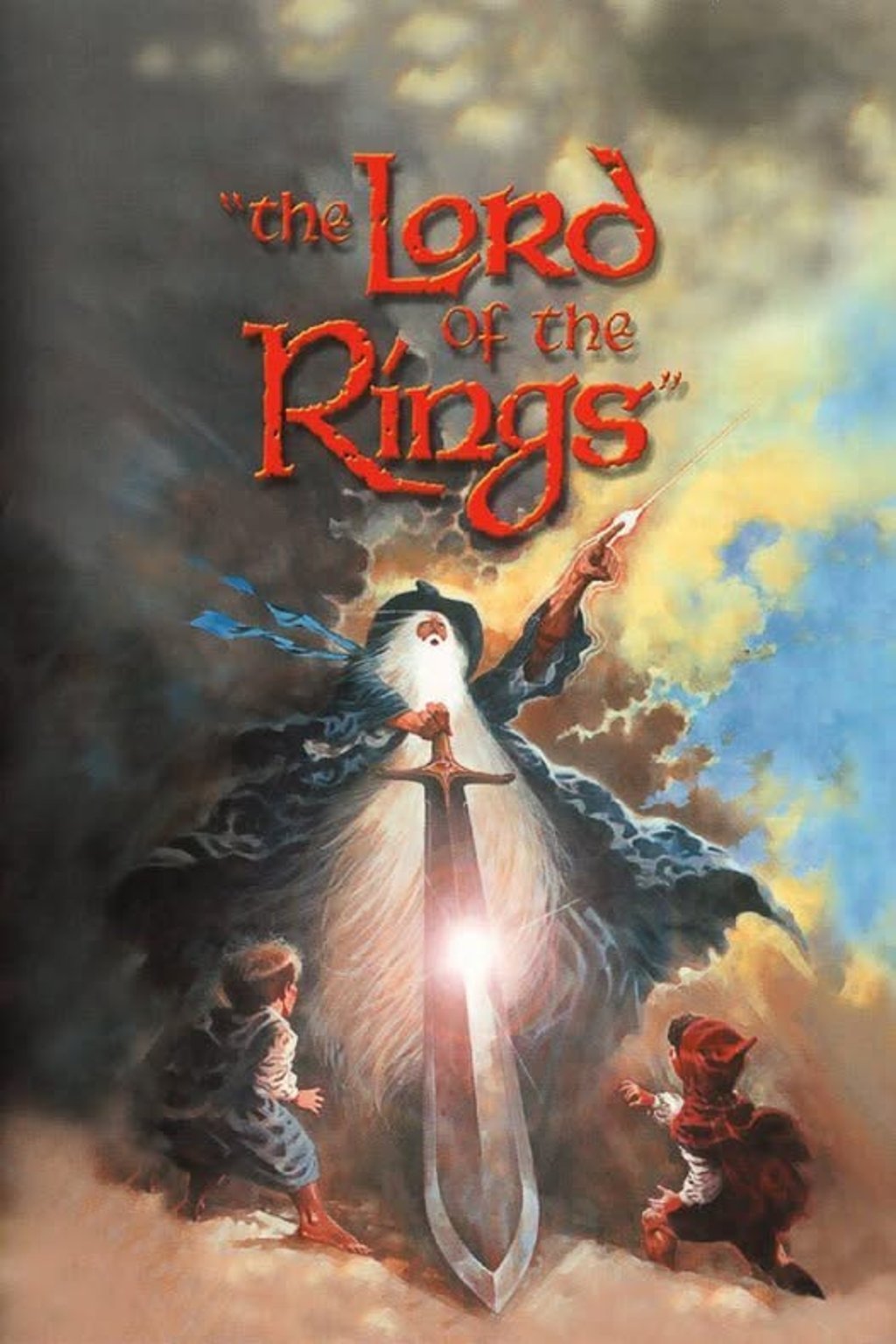
Gandalf or Teurgo
There is an interesting misconception in the way people approach magic, religion, and power. They conceive two distinct categories: on one side, the respectable religion, full of sacraments and devotions; on the other, what they call magic, spell, ritual, strange elements that belong to the pagan or esoteric world. However, upon examining the history of religions more closely, this distinction begins to dissipate like incense smoke.
Theurgy is the ancient term that describes this gray area.
And here the first misunderstanding already arises. In contemporary perception, theurgy has come to be almost considered an occult ritual filled with astrology, complex symbols, and enigmatic invocations. However, this caricature does not accurately depict what really happens when it comes to theurgy.
In its most basic definition, theurgy is a physical dialog with the divine.
It's not just about praying. It is to pray using matter.
Incense, oil, herbs, fire, bread, wine, medals, water, salt, candles. All of this is not about religious ornamentation. They are symbolic tools. Matter transforms into language.
The ancient pagan had a very clear understanding of this. For him, the gathering of herbs, soils, oils, candles, and incenses that represent certain universal symbols was not a trivial superstition. The goal was to create a kind of tangible prayer, a symbolic configuration thru which the human being communicated with the invisible.
Titus Burckhardt, when addressing universal symbolism in alchemy, precisely tackles this issue: matter possesses meanings that relate to spiritual realities.
So, what happens in these rituals? It's not that the herb has "magical power." It's that it represents something. It refers to a characteristic of creation. When many of these elements are combined, they transform into a kind of symbolic phrase directed at the divine.
A prayer made with things.
For this reason, the pagan did not see a great difference between an altar full of symbols and the biblical tabernacle with incense, sacrificed animals, and meticulously organized rituals. For him, that was also theurgy.
And, in some way, it was.
Throughout history, many pagans have made a statement that would scandalize many people today: they consider Catholicism a highly theurgical religion.
Light a candle for a saint.
Burning incense.
Apply oil.
Blessing with salt and water.
Rosário.
Medals.
Relics.
Holy Host.
From the pagan perspective, all of this is what they call theurgy. However, in Catholicism, these acts are called sacraments or sacramentals.
And here an intriguing confusion arises. Frequently, the contemporary Catholic seeks to rigidly distinguish these elements, treating the sacrament as something completely different from any ancient symbolic ritual. However, structurally, what happens is quite similar.
There is a prayer.
There is a concrete symbol.
There is a ceremonial gesture.
And there is hope that this will become a channel of divine grace.
Matter transforms into spiritual language.
And this is not about magical thinking.
Magical thinking is something different. Magical thinking is the belief that a ritual can make the universe fulfilll one's will. It is the childish conception that certain acts ensure a guarantyd outcome.
Traditional theurgy was never about that.
Theurgist does not think they have control over God.
He is convinced that he is capable of creating a space where grace can manifest.
This is completely different.
This has been well understood by the Jews over the centuries. Just observing some Kabbalistic rituals or devotional practices involving psalms, divine names, and symbolic objects is enough. Pantacles, prayers, and meditations on divine virtues function as symbolic vehicles that carry blessings.
Not like automatic magic.
However, as possible channels.
This logic is even manifested in popular practices of Christianity. I myself have made the so-called belt of Mary, for example. It is an extensive prayer, recited several times, focused on a material object that is later taken to a priest to be consecrated.
If you observe this from the perspective of an ancient pagan or a traditional Jew, they will immediately say: this is a theurgical object.
Not in the sense of enchantment.
However, in the context of a vehicle of blessing.
And, by understanding this symbolic logic of matter as prayer, some literary narratives begin to acquire extraordinary depth.
It is at this point that Tolkien comes into play.
Because Tolkien was not just creating an adventure narrative with wizards and fantastic creatures. He was manipulating spiritual symbols of great antiquity. And one of these symbols is present in the most iconic object of modern literature: the Ring.
The Talmud recounts that God gave King Solomon a silver ring with a golden star, on which the Sacred Name was engraved.
With him, it was possible to command the spirits and djinns, making them act in favor of the light.
However, when pride struck him, the ring was taken from him and was only returned when he learned genuine humility before God.
This aspect is relevant.
The ring was not just power.
It was an appointed authority.
And that changes everything.
Centuries later, Tolkien reinterpreted that very symbol.
The Ring of Solomon symbolized the legitimate power granted by the Creator, while the One Ring of Sauron represented its distorted shadow, a usurped power, devoid of grace, that corrupts and enslaves the heart.
The One Ring is the remnant of Solomon's seal.
Where there was wisdom, ambition arises.
Where there was light, darkness appears.
Where there was divine authority, the desire to dominate arises.
Tolkien saw the ring as the constant temptation of humanity: to do good, but in their own way.
This is precisely the seduction that ruins Saruman.
Saruman begins his journey as a wizard of order, a figure who should act as a collaborator of the divine. However, he begins to covet the power of the ring. Not because he wishes to destroy the world, which would be trivial, but because he believes he can do it more effectively.
And that's how evil always begins.
Corruption does not arise when someone chooses to be evil. It arises when someone believes they can govern the world better than God.
Saruman chooses goetia instead of domination magic.
Gandalf chooses theurgy instead of cooperation with the divine.
This contrast is one of the most notable elements that Tolkien created.
Gandalf never seeks to control fate. He follows it.
He never tries to take over the world.
He wakes up those who have the power to save him.
And this clarifies a question that has always intrigued many: why did Gandalf choose Bilbo and, later, Frodo to carry the ring?
Because power does not overcome power.
Humility conquers power.
Bilbo was too small to have the ambition to conquer the world.
Frodo is too.
They were not powerful.
And it was exactly for this reason that they were dangerous for the ring.
Gandalf's decision demonstrates that he understands something philosophers and psychologists have taken centuries to articulate: evil feeds on the desire for control.
That's why the scene in which he mentions Gollum is so significant.
His pen may have directed the fate of many.
Bilbo acted with mercy by choosing to treat Gollum with compassion, despite recognizing the evil within him.
And it is at this point that the narrative touches on something profoundly human.
In Man's Search for Meaning, Viktor Frankl asserts that human beings are not defined solely by external conditions, but have the freedom to choose how to respond to life. He witnessed this in the worst possible context: the concentration camps.
Even so, there were those who chose mercy.
That didn't save the whole planet.
However, he saved their souls.
Tolkien understood exactly the same idea.
A great warrior was not responsible for determining the fate of Middle-earth.
It was determined by small acts of compassion.
Bilbo feeling compassion for Gollum.
Frodo trying to save him again.
The philosophy of Eric Voegelin also reflects this moral logic. He warned that, by trying to replace openness to the transcendent with closed ideological systems, man loses connection with reality.
He begins the process of creating artificial paradises.
Middle-earth is full of these characters.
Sauron wishes to restructure the entire world under a single dominion.
Saruman is convinced that he can govern better than the kings.
Both seek to enclose the cosmos in a system.
And both fail.
Because the true meaning of life does not lie in total control.
It is at the opening to infinity.
It is for this reason that Gandalf never seeks to be the main hero of the story.
He would have a way.
However, it doesn't.
He plays the role of the ancient wizards of symbolic traditions: an intermediary between the visible and the invisible worlds.
In Arthurian myths, Merlin teaches Galahad a simple but powerful lesson: God gave man an uplifted face so that he can look up to the sky.
This sentence has a poetic tone.
However, she is extremely philosophical.
Man was created to overcome matter without renouncing reason.
For this reason, Tolkien, Chesterton, Lewis, and other traditional thinkers saw the wizard as a symbol of the harmony between reason and faith.
The true wizard does not control.
He teaches how to see.
He does not imprison reality.
He announces his order.
Gandalf's magic is not a show.
It's discernment.
This is about collaboration with Logos.
God is not disorder.
God is organization.
Symbols.
And any spiritual quest that sets aside reason turns into superstition. Similarly, any reason that rejects the transcendent becomes empty.
Faith without reason is blind.
Reason devoid of faith is fruitless.
However, when the two meet, something surprising happens.
Intelligence begins its journey toward holiness.
And then, the conclusive symbol of the ring manifests.
The object never had true power.
Never was part of the wizard.
It was never in the hero.
True power has always resided in the human ability to overcome itself.
Final considerations
Theurgy has never been sorcery disguised as piety; whoever simplifies it this way is either dishonest or has never read a single ancient text attentively. It arises from the uncomfortable realization that the soul, trapped in the body, does not ascend on its own: it needs intermediaries, tangible connections that are not just adornments, but a living language directed toward what lies beyond. The Greek term θεoυργία specifically refers to the work of God, not the work of man. It is not the theurgist who brings the divine; it is the divine that acts thru the symbols that man organizes with respect, as if preparing a table for a guest who may or may not appear. The rest is just an illusion of control, and control is the poison that turns prayer into sorcery.
The rituals that invoke gods not to command, but to integrate the cosmic order were mentioned in the Chaldean Oracles in the 2nd century. Plotinus, the purest Neoplatonist, had his reservations: for him, the ascent was a stripped-down contemplation, an absolute denial of matter. Rituals? Secondary, almost concessions to human frailty. However, Iamblichus reversed the situation with impressive coldness. In On the Mysteries, he states directly to Porphyry: the incarnate soul is contaminated by matter; philosophy alone is not enough, for matter traps us. We need symbols granted by the gods themselves – such as hieroglyphs, stones, herbs, and incenses – not because they possess mechanical power, but because they are divine signatures that activate what is already dormant in creation. Theurgy is not about human magic; it is the action of the gods manifesting thru us. Proclus takes this to the extreme: theurgy crowns Platonism by reconciling the sensible with the intelligible, using the hierarchical chain of the gods as a ladder. Goetia? That is petty: forcing demons to act for earthly reasons. Theurgy is the collaboration with what is superior aiming at the salvation of the soul.
When observing Catholicism from the perspective of an ancient pagan, or rather, how an ancient pagan would see us, there would be no structural difference between their altar and ours. Lighting a candle for a saint, burning incense in the censer, anointing with holy oil, sprinkling holy water mixed with salt, carrying sacred medals, venerating relics, receiving the consecrated host: all of this is theurgy by another name. The Catechism (1667–1690) states that they are sacramentals, that is, sacred signs that prepare for the sacraments and make everyday life more sacred. The matter is not merely decorative; it communicates. In the Eucharist, the bread and wine are not secondary elements; they are the very form of presence. The pagan would say: this is precisely what we call materialized prayer. The contemporary Catholic, often ashamed, seeks to rigidly separate the sacrament, as if it were something clean, from the ancient ritual, as if it were something dirty. However, the structure remains the same: prayer + material symbol + ritual gesture + expectation of grace. The difference lies in the origin of the authority: not in the will of the operator, but at a higher level.
In the Jewish Kabbalistic tradition, the situation becomes even more evident. Psalms recited with a defined purpose, divine names spoken in precise combinations, pantacles drawn with Hebrew letters, meditations on the sephirot: all of this forms symbolic channels to attract divine energy, the shefa. The letters are creative forces in the Zohar, while in the Sefer Yetzirah the Hebrew alphabet is responsible for the construction of the world. Practical Kabbalah (ma'asit) does not impose on God; it creates paths. Theurgy is a possible channel, but never an automatic one. Whoever thinks this is witchcraft has understood nothing: the Kabbalist understands that the power resides not in the gesture, but in the alignment with the divine will.
BIBLIOGRAPHIC REFERENCES
THE QUEST OF THE HOLY GRAIL. Arthurian Cycle of the Grail. São Paulo: Martins Fontes, 2017.
THE QUEST OF THE HOLY GRAIL. Translation of the Arthurian cycle. São Paulo: Martins Fontes, 2017.
AGRIPPA, Heinrich Cornelius (attributed). The Fourth Book of Occult Philosophy. São Paulo: Madras, 2006.
AGRIPPA, Heinrich Cornelius. Three Books of Occult Philosophy. São Paulo: Madras, 2005.
ALON, Yair (trans.). Sword of Moses. São Paulo: Yair Alon, 2021.
ALON, Yair (trans.). Hekhalot Literature: Literature of the Palaces. São Paulo: Yair Alon, 2021.
ALON, Yair (trans.). Book of the Angel Raziel (Sefer Raziel HaMalach). São Paulo: Yair Alon, 2021.
ALON, Yair (trans.). Book of Secrets (Sêfer HaRazim). São Paulo: Yair Alon, 2021.
AQUINO, Thomas of. Summa Theologica. São Paulo: Loyola, 2005.
AQUINO, Thomas of. Theological Summa. São Paulo: Loyola, 2005.
ARYEH KAPLAN. Meditation and Kabbalah. São Paulo: Sêfer, 2012.
ARYEH KAPLAN. Sefer Yetzirah: The Book of Creation. São Paulo: Sêfer, 2019.
ATTRELL, Dan; PORRECA, David (trans.). Picatrix: un tratado medieval sobre magia astral. University Park: Pennsylvania State University Press, 2019.
BETZ, Hans Dieter (ed.). Los papiros mágicos griegos en traducción: incluyendo los hechizos demóticos. 2nd ed. Chicago: University of Chicago Press, 1992.
BIBLE. Old Testament.
BIBLE. Holy Bible. Translation by João Ferreira de Almeida. Barueri: Brazilian Bible Society, 2011.
BURCKHARDT, Titus. Alchemy: science of the cosmos, science of the soul. São Paulo: Morning Star, 2023.
CATECHISM OF THE CATHOLIC CHURCH. Catechism of the Catholic Church. 5th ed. São Paulo: Loyola, 2017.
CATECHISM OF THE CATHOLIC CHURCH. Catechism of the Catholic Church. São Paulo: Loyola, 1999.
CHESTERTON, G. K. Heretics.
CHESTERTON, G. K. The man who was Thursday: a nightmare.
CHESTERTON, Gilbert Keith. Heretics. Campinas: Ecclesiae, 2014.
CHESTERTON, Gilbert Keith. The Man Who Was Thursday. São Paulo: Ecclesiae, 2015.
CHESTERTON, Gilbert Keith. Orthodoxy. São Paulo: Ecclesiae, 2017.
FRANKL, Viktor E. Man's Search for Meaning: An Introduction to Logotherapy. Petrópolis: Voices, 2016.
FRANKL, Viktor Emil. Man's Search for Meaning: An Introduction to Logotherapy. Petrópolis: Voices, 2016.
GRANADOS, José. Introduction to Sacramental Theology: Signs of Christ in the Flesh. Washington: Catholic University of America Press, 2021.
JAMBLICUS. On the Mysteries of the Egyptians, Chaldeans, and Assyrians. São Paulo: Polar Editorial, 2024.
JAMBLICUS. On the Mysteries of the Egyptians, Chaldeans, and Assyrians. Translation and notes by Emanuel Angelo Fragoso Brasil. São Paulo: Polar Editorial
KAPLAN, Aryeh. Meditation and Kabbalah: Theory and Practice. Translation by Erwin Von-Rommel Vianna Pamplona. São Paulo: Sêfer, 2005.
KAPLAN, Aryeh. Sefer Yetzirah: The Book of Creation in Theory and Practice. Revised edition. York Beach, Me.: Weiser Books, 1997.
KAPLAN, Aryeh. Immortality, Resurrection, and the Age of the Universe: A Kabbalistic Perspective. São Paulo: Sefer, 2003.
LEMEGETON. Lemegeton: the lesser key of Solomon. São Paulo: Madras, 2007.
LEWIS, C. S. Letters from a Devil to His Apprentice. São Paulo: Thomas Nelson Brazil.
LEWIS, C. S. Pure and Simple Christianity. São Paulo: Thomas Nelson Brazil.
LEWIS, Clive Staples. Letters from a Devil to His Apprentice. São Paulo: Thomas Nelson Brazil, 2019.
LEWIS, Clive Staples. Pure and Simple Christianity. São Paulo: Thomas Nelson Brazil, 2017.
MAGGI, Humberto. Goetia: history and practice. São Paulo: Clube de Autores, 2016.
MAGGI, Humberto. Practical Ritual of Solomon's Hygromancy. São Paulo: Clube de Autores, 2018.
MAGGI, Humberto. Thesaurus Magicus. Vol 4 and Vol 6. São Paulo: Clube de Autores.
PINGREE, David (ed.). Picatrix: la versión latina de la Ghāyat al-Ḥakīm. Londres: The Warburg Institute, University of London, 1986.
PLOTINUS. Enneads. São Paulo: Loyola, 2018.
PROCLUS. Platonic Theology. São Paulo: Paulus, 2021.
RAZIEL HAMALACH. Sefer Raziel HaMalach: the book of the angel Raziel. São Paulo: Madras, 2014.
SOLOMON (attributed). The Solomon Key. São Paulo: Madras, 2011.
TALMUD. Tractate Gittin. Reference to the legend of Solomon's ring).
TALMUD. Treatise Gittin. São Paulo: Sêfer, 2019.
TOLKIEN, J. R. R. The Lord of the Rings. São Paulo: Martins Fontes, 2020.
TOLKIEN, John Ronald Reuel. The Lord of the Rings. São Paulo: Martins Fontes, 2020.
TOLKIEN, John Ronald Reuel. The Silmarillion. São Paulo: Martins Fontes, 2019.
VOEGELIN, Eric. The New Science of Politics: An Introduction. São Paulo: É Realizações, 2012.
ZOHAR. Zohar Collection: volumes 1 to 6. : Kabbalah Center Brazil.
ZOHAR. The Zohar. São Paulo: Kabbalah Center Brazil, 2018.
ZOHAR. The Zohar: Portuguese Edition. São Paulo: Center for Kabbalah Brazil, 2018.